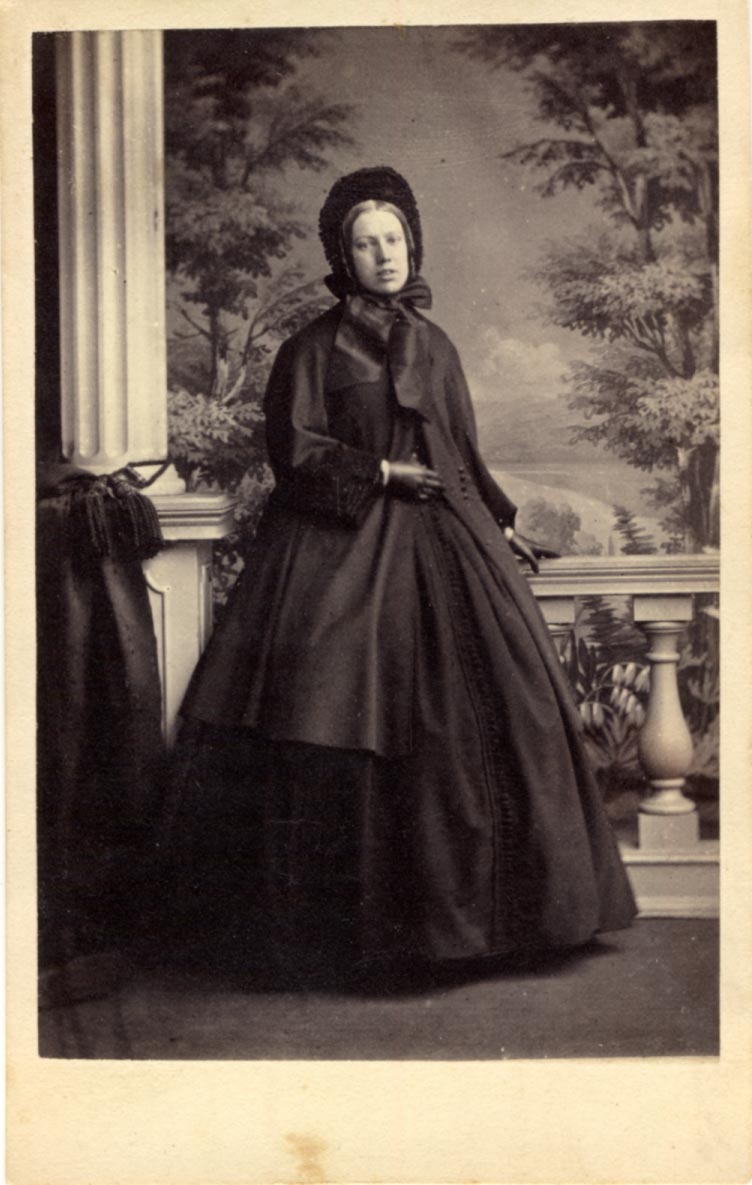
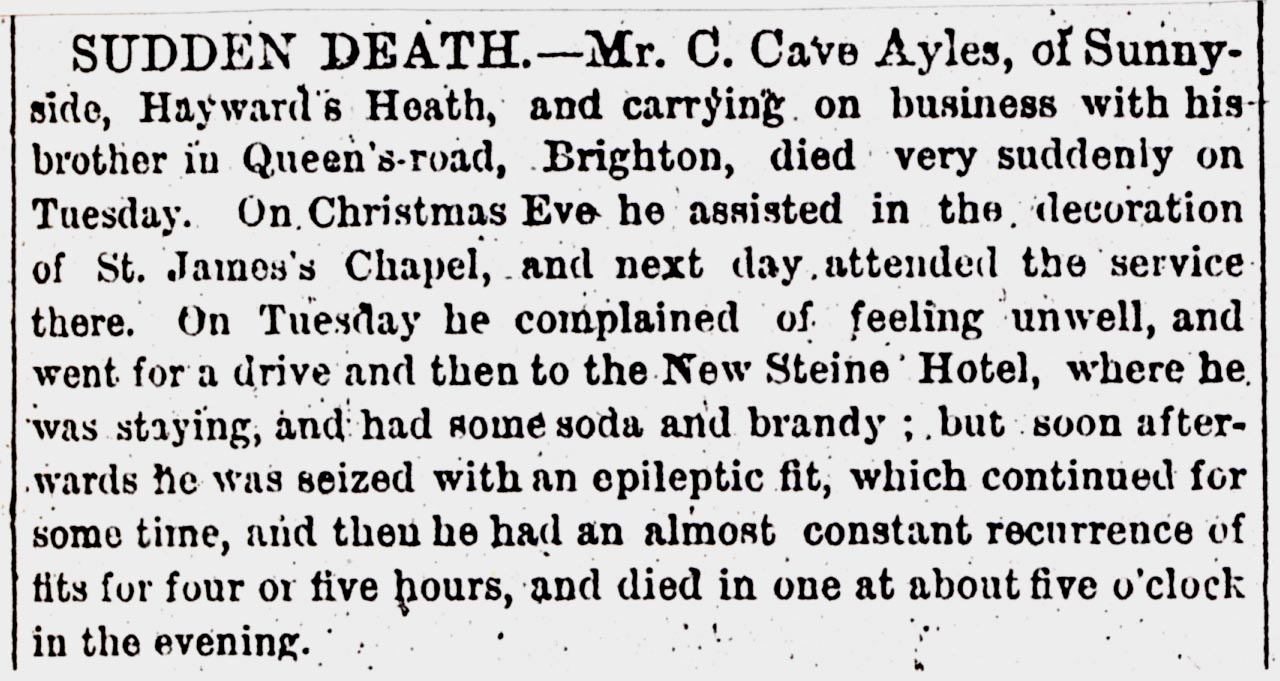
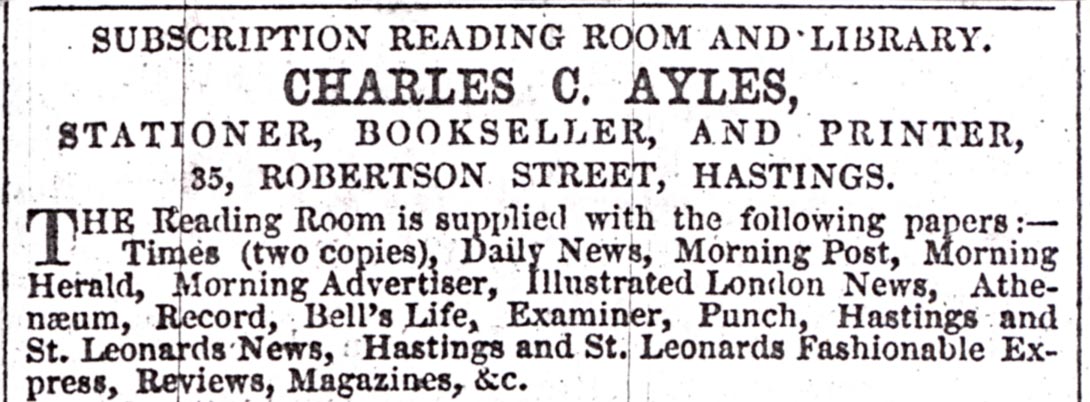
In 1841, Charles Cave Ayles, then aged about 16, was employed as an assistant at Henry Bebbington's stationery business at 426 The Strand, London. By the end of December,1853, Charles Cave Ayles had opened his own stationery and bookselling business at 35 Robertson Street, Hastings. At his business premises in Robertson Street, Charles C. Ayles established a Reading Room, where he supplied newspapers and magazines and operated a "Subscription Library".
|
|
| [ABOVE] Part of an advertisement for Charles C. Ayles, Stationer, Bookseller and Printer of 35 Robertson Street, Hastings, which appeared in The Hastings & St Leonards News on 6th October, 1854. In addition to books and stationery, Charles Cave Ayles also sold travelling cases, brushes, soaps and perfumery. |
In 1855, Charles Cave Ayles married Eliza Williams [marriage registered in the Kensington District of Middlesex during the December Quarter of 1855]. Charles's new wife gave birth to a daughter on 6th August 1856, but Eliza died five days after the birth of her child [ Mrs Eliza Ayles died on 11th August 1856 and was buried in Hastings on 14th August 1856. Eliza was only 24 years of age when she died]. For the next 14 years, widower Charles Ayles raised his daughter Lizzie Ayles, without a wife, but with the assistance of his mother, Mrs Mary Elizabeth Bonniwell, and a couple of servants.
From the mid 1850s, Charles Cave Ayles was showing an interest in photography. By October 1856, Charles Ayles had become an agent for the London Stereoscopic Company and a newspaper advertisements in December 1856 announced that Ayles' Library at 35 Robertson Street, Hastings had just received "a fresh assortment of beautiful (stereoscopic) views". In the 1850s, Robertson Street was already a popular location for photographic portrait studios. In 1856, there were only four permanent photographic studios in Hastings & St. Leonards, yet two of these were situated in Robertson Street. In 1856, Thomas Mann junior (1838-1874), the son of Thomas Mann senior, a carver & gilder, had opened a photographic studio at his father's business premises at 20 Robertson Street, Hastings. Around the same time, John Tredray (1801-1880), an artist and teacher of drawing and painting, began to produce "portraits taken by Photography on glass or paper" at his residence at No 3 Robertson Street, Hastings.
The presence of competitors in Robertson Street did not deter Charles Cave Ayles from his plan to set up a photographic portrait studio in the same street. In March 1857, Charles Ayles sold his bookstore and stationery business to George Lindridge and with the resulting capital (and possibly financial assistance from his mother) he established a photographic studio at Trinity House at No 44 Robertson Street. Around this time, Charles Cave Ayles was living at 11 Claremont, Hastings, with his twice widowed mother Mrs Mary Elizabeth Bonniwell and twenty-two year old William Cave Bonniwell, the son from her second marriage. Mrs Mary Bonniwell was a woman of independent means and possibly helped finance her son's business. (In the 1861 census, Mrs Bonniwell is described as a "Landed Proprietor" ). Mrs Bonniwell's residence at 11 Claremont, Hastings, was a short distance from the proposed photographic studio in Robertson Street. Charles Cave Ayles invited his younger half brother, William Cave Bonniwell (born c1835, Brompton, Kent) to enter into a business partnership and by October 1857, the photographic studio of Messrs. Ayles & Bonniwell had opened at Trinity House, 44 Robertson Street, Hastings.
 |
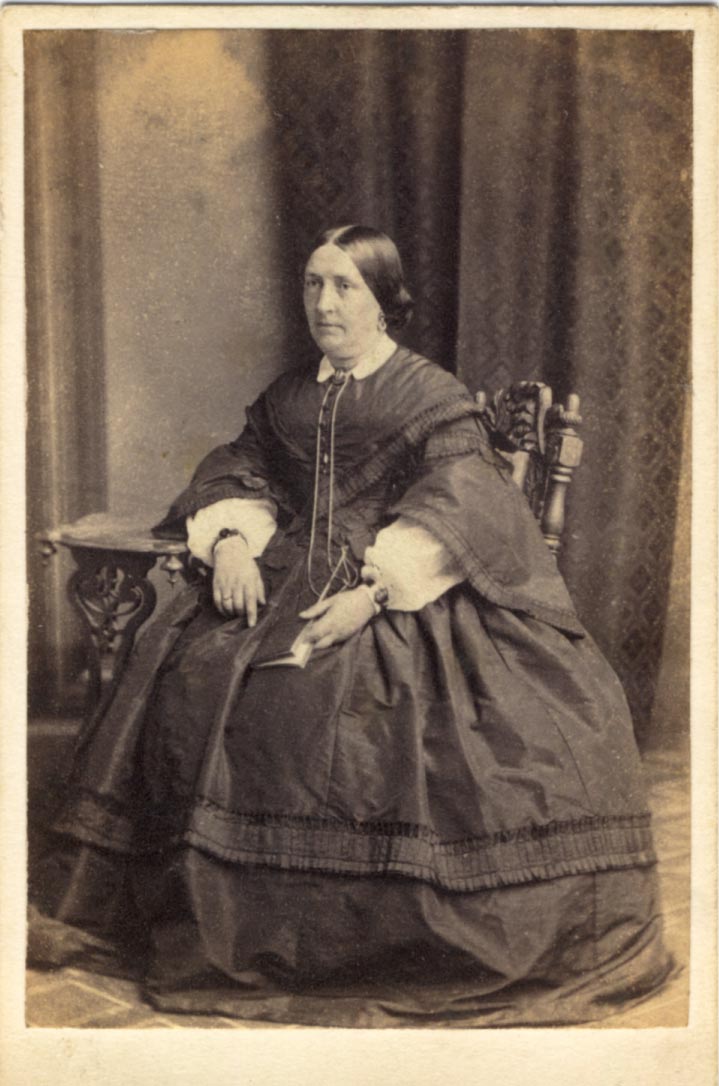 |
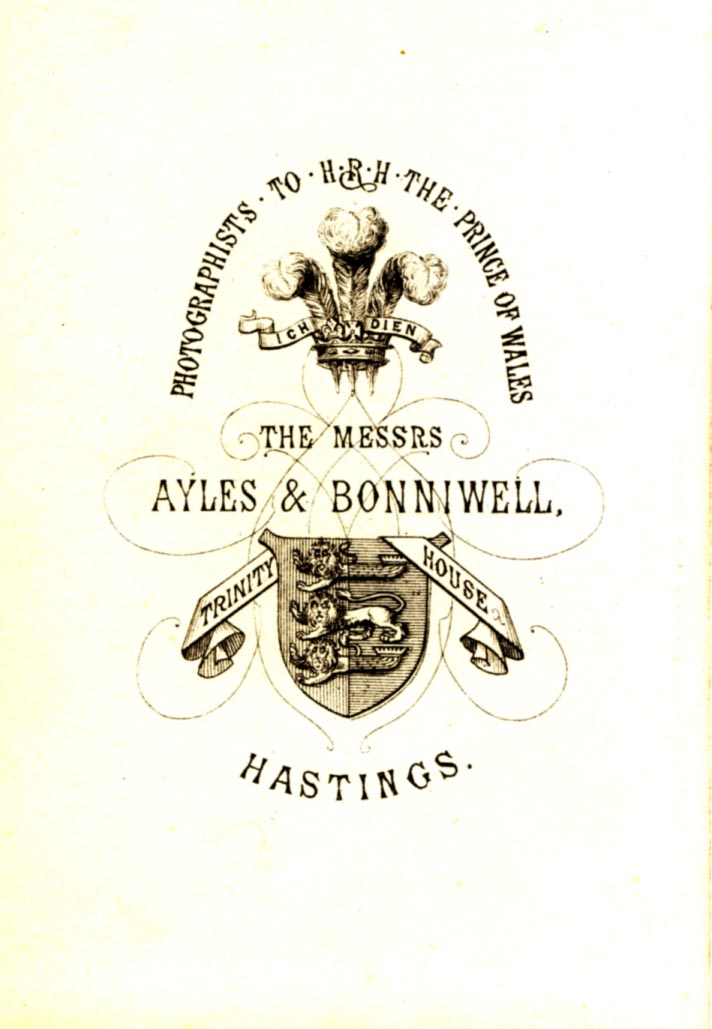
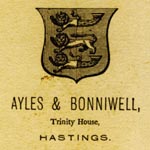
| [ABOVE] The trade plate of Messrs Ayles & Bonniwell of Hastings, printed on the reverse of a carte-de-visite (c1865). | [ABOVE] A portrait of a seated woman by Ayles & Bonniwell of Trinity House, Hastings. Carte-de-visite (c1863) |
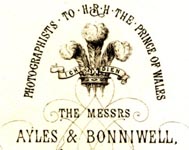
The photographic studio of Ayles & Bonniwell at Trinity House, Hastings ran successfully for the next ten years. The photographic portraits taken by Ayles & Bonniwell were generally of high quality and the studio attracted wealthy sitters and members of the nobility. In advertisements published early in 1865, Ayles & Bonniwell claimed to be "PHOTOGRAPHISTS TO H.R.H. THE PRINCE OF WALES". From this date, the trade plate of Ayles & Bonniwell carried the heraldic badge of the Prince of Wales (three ostrich feathers rising through a coronet) to indicate royal patronage.
Small photographic portraits formed the major part of Ayles & Bonniwell's business, but the photographers also produced views and larger, oil-coloured portraits. For instance, the firm of Ayles & Bonniwell are known to have made photographs of Hollington Church after its restoration. Over a two day period on 26th and 28th December, 1865, Ayles & Bonniwell reportedly produced "38 portrait studies - coloured in oils" of members of the cast who had appeared in a theatrical production of Sheridan's play "The Rivals".
The quality of the photographs which were produced at the studio of Ayles & Bonniwell would lead one to assume that the two brothers employed skilled operators from top London studios. However there is evidence that the studio proprietors were actively engaged in the creation of the photographic portraits. In the 1861 census, Charles Cave Ayles and William Cave Bonniwell are recorded at 11 Claremont, Hastings, the home of their mother Mrs Mary Bonniwell and both Charles and William give their profession as "Artist". In a newspaper advertisement published in April 1865, the two brothers declared: "Portraits taken daily in the highest style of Art, from "Carte de Visite" to life size, under Messrs. AYLES and BONNIWELL'S personal care"
|
|
|
| [ABOVE] Trade plates for Ayles & Bonniwell of Trinity House, Hastings. The design used in 1863 (left) and the design used in 1865 (right). | |
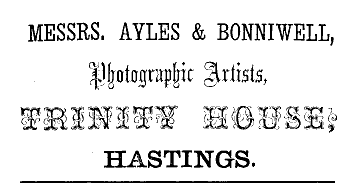
[ABOVE] An advertisement which appeared in Melville & Co.'s Directory & Gazetteer of Sussex of 1858. Trinity House was at No 44 Robertson Street, Hastings. Charles Cave Ayles had previously operated a stationery and bookselling business at No. 35 Robertson Street, Hastings. In 1857, he entered into a business partnership with his half brother William Cave Bonniwell to form the firm of Ayles & Bonniwell, Photographic Artists.
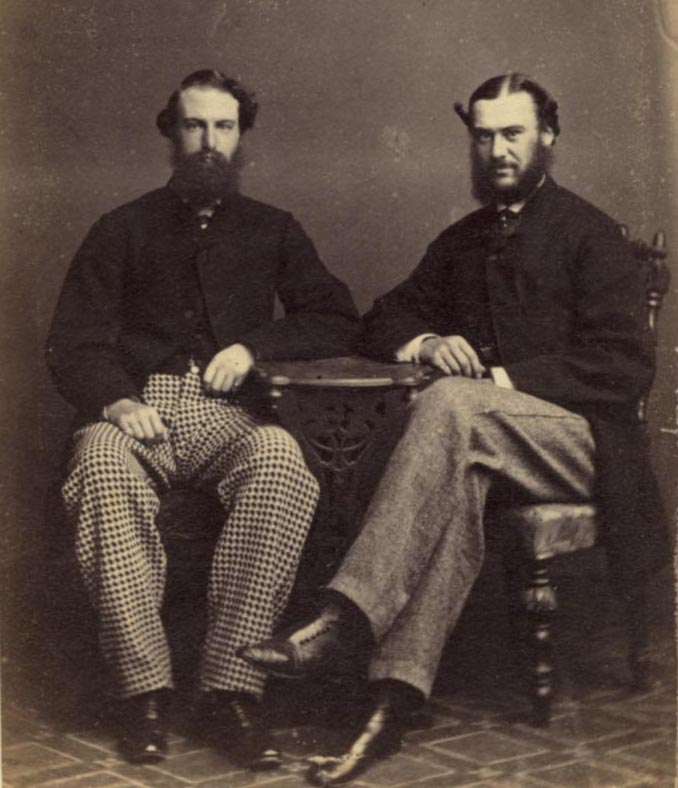
| [ABOVE] A carte-de-visite portrait of two men produced at the studio of Messrs Ayles & Bonniwell, Photographic Artists of Trinity House, Hastings. Charles Cave Ayles entered into a business partnership with his half brother William Cave Bonniwell to form the firm of Ayles & Bonniwell in 1857. |
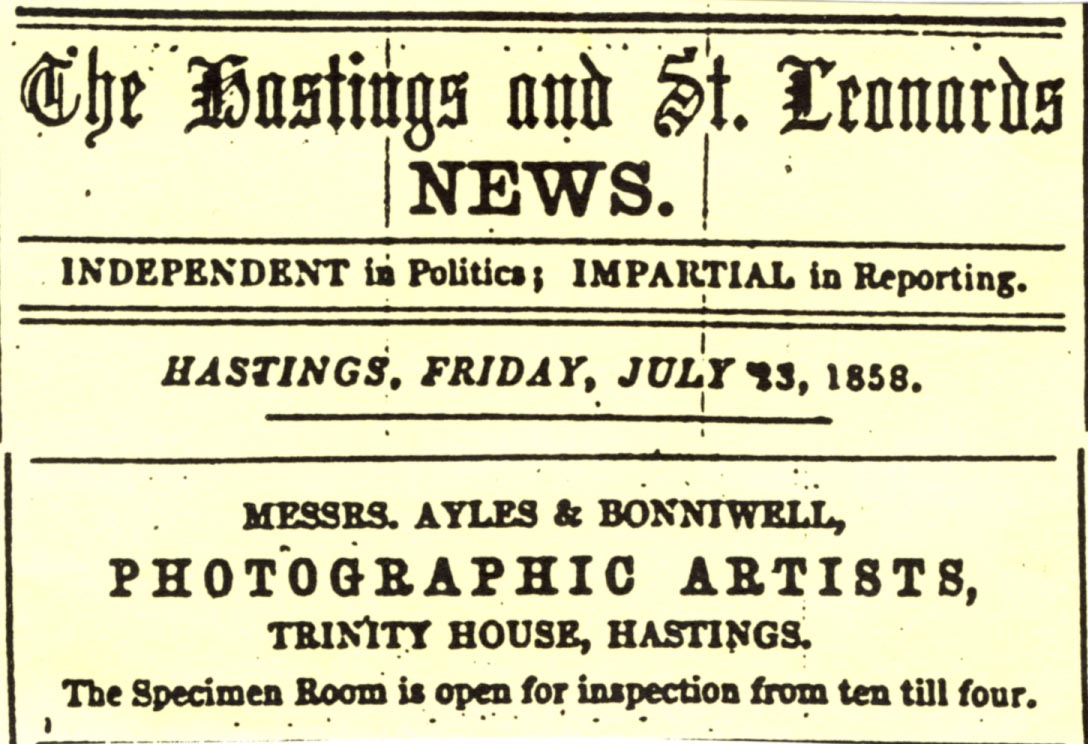
| [ABOVE] An an advertisement for Messrs Ayles & Bonniwell, Photographic Artists of Trinity House, Hastings, which appeared in The Hastings & St Leonards News in July 1858. Early studios could only operate during daylight hours and so the business opened at 10 am and closed at four o'clock in the afternoon. |
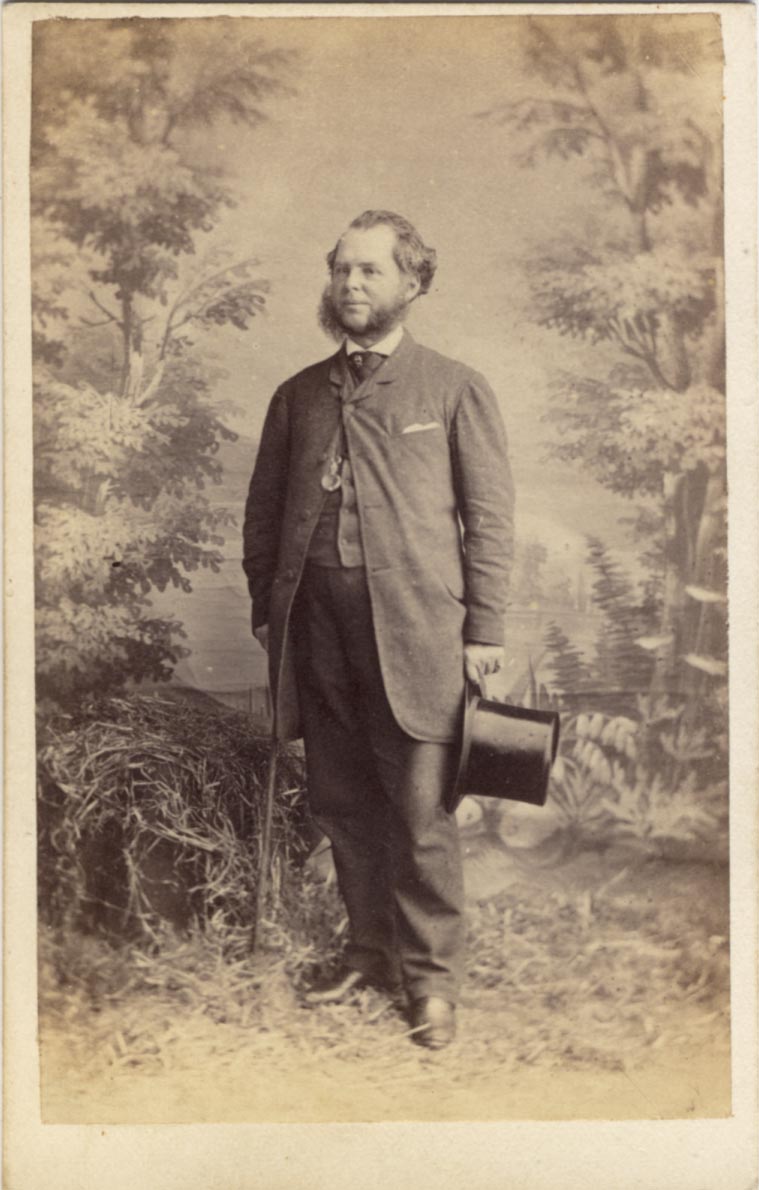
| [ABOVE] A portrait of George Lindridge by Ayles & Bonniwell of Trinity House, Hastings. (Inscribed "G. Lindridge" in pencil, on the reverse of the cdv). George Lindridge (c1815-1882), was a "Professor of Music" and organist who purchased Charles C. Ayle's bookselling and stationery business in 1857. Lindridge added a Music Repository to the bookshop at 35 Robertson Street and later set up a pianoforte warehouse in premises he shared with Ayles & Bonniwell at No.44 Robertson Street. |