Worthing Photographers (E1)

Click here to return to Home Page

Professional Photographers in Worthing (E1)

  Edward Edwards  ( aka Edward Bex ) - Edward Charles Edwards ( aka Edward Charles Bex )  - (David) Robert Everest


Edward EDWARDS  aka Edward BEX (c1847-1928)

"Edward Edwards" was the trading name of Edward Bex (c1847-1928). Edward Bex was born around 1847 in Limpsfield, a Surrey village on the border with Kent, some 21 miles south of London. Edward Bex was one of eleven children born to Mary Ann and Henry Bex (c1814-1886), a carpenter by trade.

Henry Bex was born in Westminster, London, around 1814. Henry Bex moved around from place to place during his working career as a carpenter. In the mid 1830s, Henry Bex was in Sussex and on 30th May 1836, the young carpenter married twenty year old Mary Ann Hart at St. Nicholas Church in Brighton. His bride, Mary Ann Hart (1816-1887) was the daughter of Mary and John Hart of Worthing. Mary Ann Hart was born in Worthing in 1816 and was baptised at Broadwater (Worthing) in Sussex on 6th May 1816.

Henry and Mary Ann Bex's first child, Mary Ann, was born in 1837 at Petworth in Sussex, but by the time their second child, William, was born in 1839, Henry Bex and his family were living in Sanderstead in Surrey. A third child, Elizabeth, was baptised in Sanderstead on 6th June 1841, yet when it was time for George, Mary Ann's fourth child, to be christened early in June 1843, the Bex family had settled in the village of Limpsfield, near Oxted in Surrey. Henry and Mary Ann Bex stayed in Limpsfield for about four years. During this time there were two more additions to the family - James Hart Bex, who was baptised in Limpsfield on 4th April 1845 and Edward Bex, christened on 28th March 1847.

By the Summer of 1849, Henry Bex was living in the Ticehurst area of Sussex, close to the border with Kent. The birth of Ellen Louisa Bex, Henry and Mary Ann's seventh child, was registered in the Ticehurst District during the 3rd Quarter of 1849. Henry and Mary Ann Bex remained in this area for the next nine years and during time there were four further additions to the Bex family - Alfred Bex (born 1851), Rebecca Bex (born 1853), John Hart Bex (born 1855) and, finally, Henry Robert Bex, whose birth was registered in the Ticehurst District during the 4th Quarter of 1858.

Henry Bex's wanderings continued and by the time the 1871 census was taken, he was living in Northamptonshire with his wife Mary Ann and their three youngest sons. By this date, Henry's son Edward Bex had already embarked on his photographic career in Sussex.

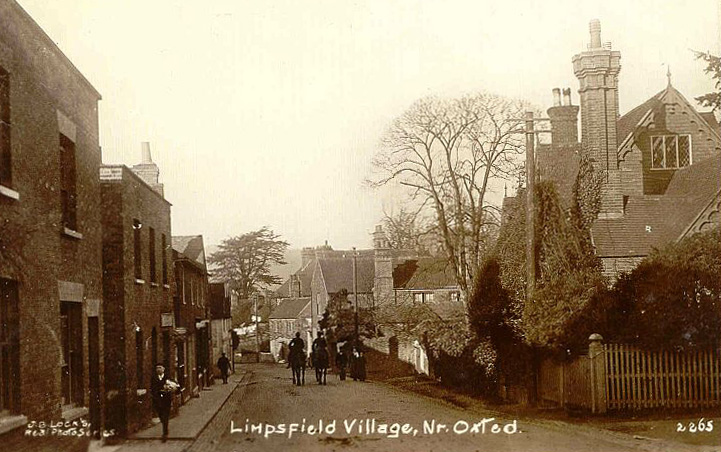
[ABOVE] A picture postcard published during the First World War showing the Surrey village of Limpsfield, where the photographer Edward Bex (aka Edward Edwards) was born and raised in the 1840s. Edward Bex's father, Henry Bex, worked as a carpenter and his employment took him to various places in Surrey, Sussex and Kent. Edward Bex spent his childhood in the Ticehurst area, close to the border with Kent. When his father and mother and his younger siblings moved to Northamptonshire, Edward Bex remained in Sussex.

Edward Bex in Hastings and St. Leonards

By 1871, Edward Bex was earning his living as a professional photographer in Hastings, Sussex. In his later publicity, Edward Bex suggests that he had started his photographic career at the Royal Polytechnic in London's Regent Street. In 1869, Edward Bex was in the Sussex seaside resort of Worthing where he married Eliza Churcher (born 16th July 1846, Worthing), the daughter of Frances and James Churcher, a Worthing bricklayer. [The marriage of Edward Bex and Eliza Churcher was registered in Worthing during the Fourth Quarter of 1869]. Edward Bex's mother, Mary Ann Hart, was originally from Worthing and so the young photographer might have had family links with the town. Alternatively, Edward Bex might have been an itinerant photographer who was touring the seaside resorts on the Sussex coast. Around 1870, Edward Bex found employment in the Hastings studio of Edwin Whiteman (1834-1876). Edwin Whiteman was a stationer and bookseller with business premises at 52 High Street, Hastings. A photographic studio had been established at 52 High Street in 1866 and when Whiteman took over ownership of the studio in 1868, he employed an experienced London photographer, John Talbot Lane (1841-1884) to manage the studio. When Lane left in 1869, Whiteman recruited Edward Bex as his studio manager.

Towards the end of 1870, Eliza Bex gave birth to a baby daughter named Georgina [birth of Georgina Bex registered in the district of Hastings during the 4th Quarter of 1870]. At the time of the 1871 census, Edward Bex and his family were living at 1 Stainsby Street, St. Leonards, near Hastings. By this date, Edward Bex was employed as the Manager of Edwin Whiteman's photographic studio at 52 High Street, Hastings. On the census return, Edward Bex is described as a "Photographer", aged 24.

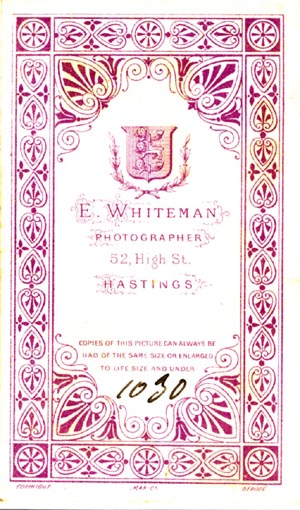
[ABOVE] The reverse of a carte-de-visite photograph produced at Edwin Whiteman's studio at 52 High Street, Hastings around 1869, the year Edward Bex was appointed studio manager.

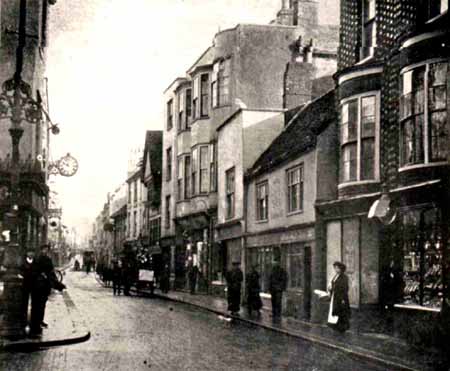
[ABOVE] No 52 High Street, the flint-faced building at the extreme right of this photograph, was the location of Whiteman's photographic Studio in Hastings, where Edward Bex was employed as a photographer and studio manager in the early 1870s. [ Photo by F. J. Parsons, 1911 ]


Edward Bex's Studio in Silverhill, St. Leonards

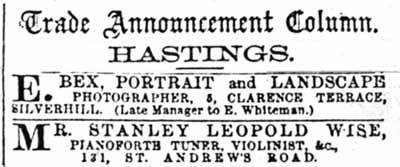
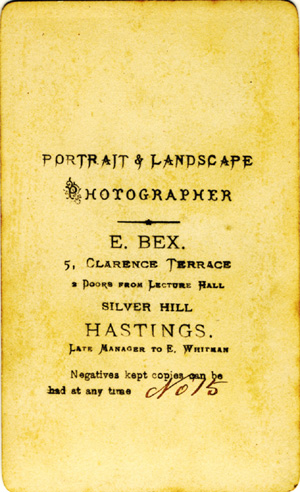
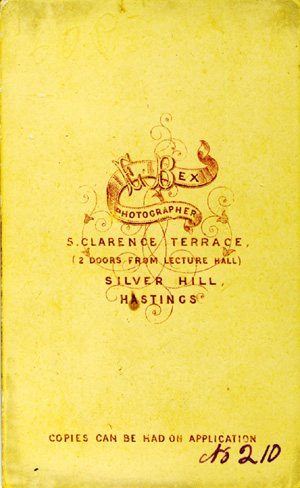
After a few years with Edwin Whiteman, Edward Bex established his own photographic studio at 5 Clarence Terrace, St. Leonards in the Silverhill district of Hastings. Edward Bex is recorded as a photographer at Clarence Terrace, Silverhill, St. Leonards in the 1874 Post Office Directory of Sussex. Early in 1875, Bex advertised his services as a "Portrait and Landscape Photographer" in the local press (see the illustration on the right) .

There were three more additions to Edward Bex's family during his stay in St. Leonards - Maud Eveline Bex (born in St. Leonards during the 2nd Quarter of 1872), Eliza Bex (born in St. Leonards during the 4th Quarter of 1873) and Edward Charles Bex (born in St. Leonards during the 2nd Quarter of 1875). Sadly, Edward Bex's daughter Eliza died at the age of two in 1876 [ death registered in the District of East Preston (Worthing) during the 1st Quarter of 1876]. Bertha Bex, possibly another daughter, died in the Worthing area shortly after her birth during the 2nd Quarter of 1876. The deaths of two Bex children in Worthing in 1876 suggests Edward Bex had closed his studio in St. Leonards after only a couple of years in business.

[ABOVE] An advertisement for Edward Bex, Portrait and Landscape Photographer, 5 Clarence Terrace, Silver Hill, St Leonards, Hastings, published in the Hastings & St. Leonards Independent newspaper on Tuesday, 12th January, 1875. In this advert, Bex points out that he had previously worked as a studio mamager to Edwin Whiteman of High Street, Hastings.

Carte-de-visites from Edward Bex's Silver Hill Studio in Hastings

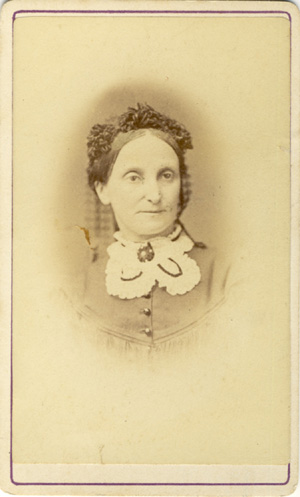
[ABOVE] Vignette portrait of a woman, photographed at Edward Bex''s studio at 5 Clarence Terrace, Silver Hill, St Leonards, Hastings. Carte-de-visite photograph, negative number No. 75 ( c1874).

[ABOVE] The reverse of a carte-de-visite photograph produced at Edward Bex''s studio at 5 Clarence Terrace, Silver Hill, St Leonards, Hastings (c1874)

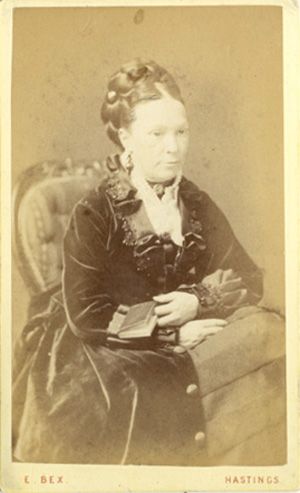
[ABOVE]  Portrait of a woman holding a book, photographed at Edward Bex''s studio at 5 Clarence Terrace, Silver Hill, St Leonards, Hastings. Carte-de-visite photograph, negative number No.210 ( c1875).

[ABOVE] The reverse of a carte-de-visite photograph produced at Edward Bex''s studio at 5 Clarence Terrace, Silver Hill, St Leonards, Hastings (c1875)

Edward Bex in London

By the late 1870s, Edward Bex was working as a photographer in London. Edward Bex had found employment with David Rees & Co., a firm of photographers which owned studios in Brixton, Lambeth and Stockwell. The firm of Rees & Co. had been founded by the photographer David Rees (c1838-1877), but after his death the business passed to his widow Mrs Hannah Rees (c1845-1908). At the end of 1879, Hannah Rees married a photographer named William Henry Portlock (born c1834, Brixton), but she continued the firm as Rees & Co. In the late 1870s, the firm of Rees & Co. was operating studios at 298, Clapham Road, Stockwell, and 5 Atkinson Place, Brixton Road, Brixton. Edward Bex was presumably employed at one of these studios in South West London.

At the time of the 1881 census, Edward Bex and his family were living at 32 Miles Street, Lambeth, S.W.London. Edward Bex is described on the census return as a "Photographer's Assistant", aged 34. Edward's wife Eliza, aged 34, and two of their children - eight year old Maud and Charles Edward Bex, aged 6 - are also recorded at the Miles Street address. [Emily Bex's eldest daughter, nine year old Georgina Bex was in Worthing, visiting her mother's sister Fanny Churcher (born 1847, Worthing), who was employed as a Housekeeper at 'Newlyn', Broadwater, Sussex ].

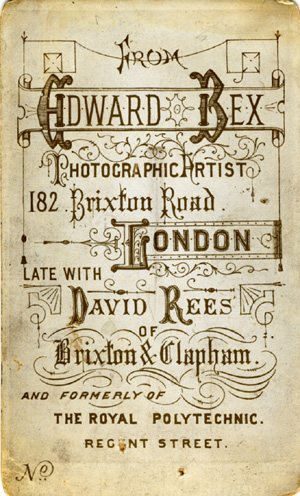
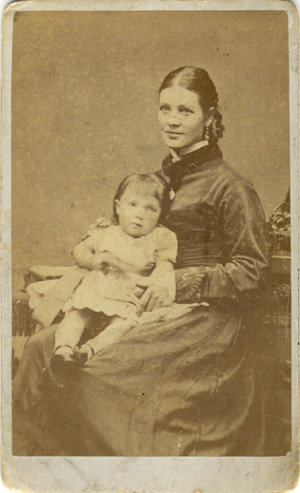
Early in 1882, Eliza Bex gave birth to a second son, Percy William Bex [ birth registered in Lambeth during the 1st Quarter of 1882]. During this period, Edward Bex established his own photographic studio at 182 Brixton Road, London.

By 1884, Edward Bex and his family had left South West London. Towards the end of 1884, Edward's wife Eliza died in Chelsea at the age of 37 [death of Eliza Bex registered in the district of Chelsea during the Fourth Quarter of 1884].

There is some evidence that after his wife's death, Edward Bex operated a photographic studio with one of his brothers in Camden Town. David Webb, who has made a study of photographers in Victorian London, has established that the firm of Bex Brothers worked from a studio at 56 High Street, Camden Town, near St Pancras, London, from 1884 to 1885. A London trade directory of 1886 also lists the studio of Bex Brothers at 56 High Street, Camden Town. David Webb names the partners in the firm of Bex Brothers as Edward Bex and Amos Bex. Edward Bex did not have a brother named Amos, and the only Amos Bex who appears in the 1881 census gives his place of birth as Brighton. This Amos Bex (born 1839, Brighton) was the son of Frederick and Sarah Bex.

By 1887 the Bex Brothers studio in Camden Town had closed and Edward Bex had returned to Worthing, the home town of both his mother and his late wife.

[ABOVE] The reverse of a carte-de-visite photograph produced at Edward Bex''s studio at 182 Brixton Road, London (c1881)

[ABOVE]  Portrait of a woman holding a child, photographed at Edward Bex''s studio at 182 Brixton Road, London. Carte-de-visite  (c1881)

Edward Bex in Worthing under the name of Edward Edwards

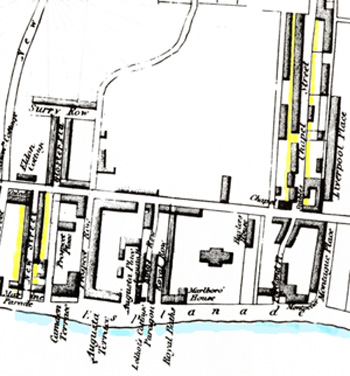
According to his own publicity, Edward Bex established a studio in Worthing in 1887. For some unknown reason, Edward Bex operated his Worthing studios under the name of "Edward Edwards". Bex's first studio was located at 94 Chapel Street, Worthing. An entry in Kelly's 1890 Directory of Sussex lists the studio of Edward Edwards at Chapel Street, Worthing. From the beginning, the studio of "Edward Edwards" (Edward Bex) was known as the Belle Vue Studio. The row of houses on the right-hand side of Chapel Street running from No. 70 to No.98, leading up to Ambrose Place, was known as "Belle Vue". Edward Bex at No.94 Chapel Street was therefore provided with a pleasant-sounding name for his studio.

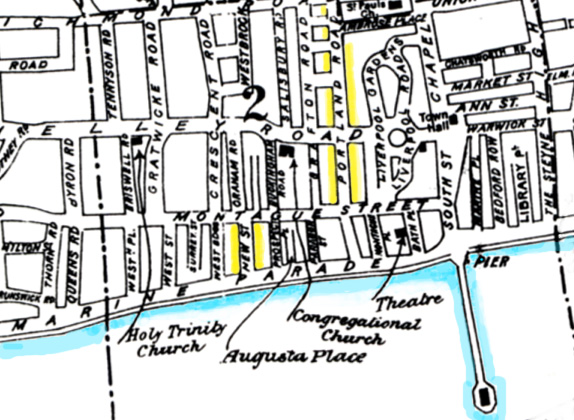
Around 1890, the firm of Edward Edwards (Edward Bex) opened a second studio near the seafront at 20 New Street, Worthing. When the 1891 census was taken, Edward Bex is recorded at 20 New Street, with his two sons - Edward Charles Bex, aged 16, and eight year old Percy William Bex. Also living at 20 New Street was the boys' aunt, Fanny Churcher, who was employed as a "Housekeeper" by her brother-in-law. The availability of his late wife's sister as a housekeeper and surrogate mother might have persuaded the widowed photographer to settle in Worthing. Edward Bex's eldest daughter Georgina (born 1870) was staying with Fanny Churcher in Worthing when the 1881 census was carried out. Edward Bex, the Head of Household, is entered on the census return as a forty-five year old widower. Edward Bex gave his occupation as "Photographer (Employer)". Edward's eldest son, Edward Charles Bex, is described on the census form as a "Photographer's Assistant", aged 16.

When the 1891 census was taking, Edward's youngest daughter, eighteen year old Maud Eveline Bex,  was preparing for her wedding. Her future husband was a twenty-one year old cab driver named Ralph Teesdale. Edward's eldest daughter, Georgina Bex (born 1870) married a young market gardener named  William Parker (born 1867, West Tarring, Sussex) early in 1895.

By 1896, Edward Bex (Edward Edwards) had closed his "Belle Vue Studio" at 94 Chapel Street. This area was being redeveloped and soon Chapel Street would no longer exist, being replaced by Portland Road. From 1896, Edward Bex would operate solely from the Edward Edwards' studio at 20 New Street, Worthing.

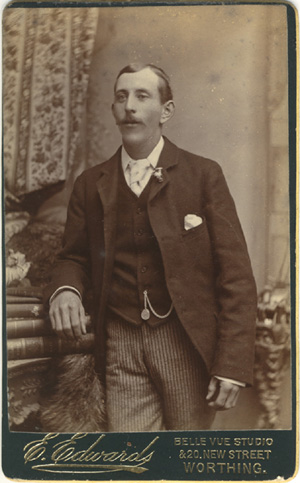
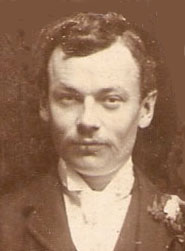
[ABOVE] A carte-de-visite portrait of a man with a moustache, photographed by Edward Bex under the name of  "Edward Edwards". This portrait was probably taken at Edward Bex's Belle Vue Studio in Chapel Street. Bex's second studio at 20 New Street later became known as the "Excelsior Studio".

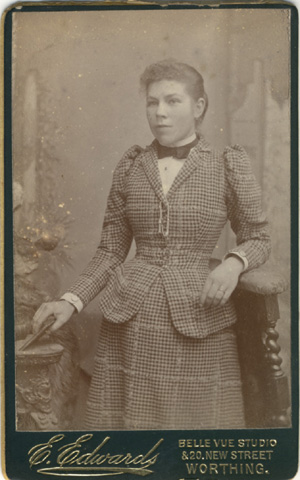
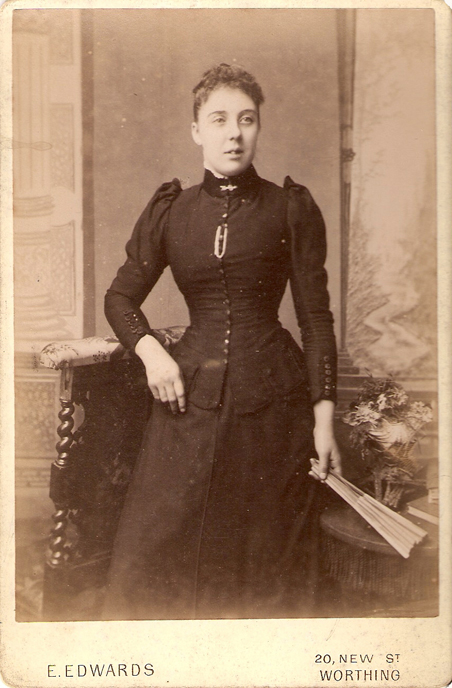
[ABOVE] A carte-de-visite portrait of a young woman photographed by Edward Bex under the name of  "Edward Edwards". (c1893). The firm of Edward Edwards operated two studios, one at 94 Chapel Street , the other at 20 New Street, Worthing until about 1895.


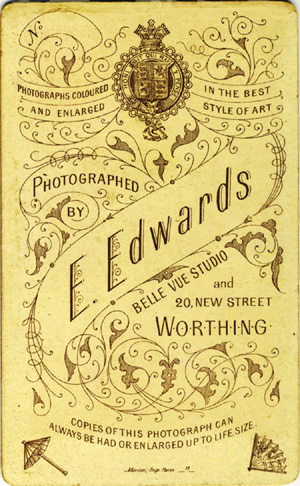
[ABOVE] The reverse of a carte-de-visite photograph produced by Edward Bex under the name of "E. Edwards". This carte dates from around 1890 when Edward Bex was operating two studios under his trading name of Edward Edwards. The first studio was in Chapel Street and was known as the 'Belle Vue Studio' and the second was at 20 New Street, Worthing, near the seafront.

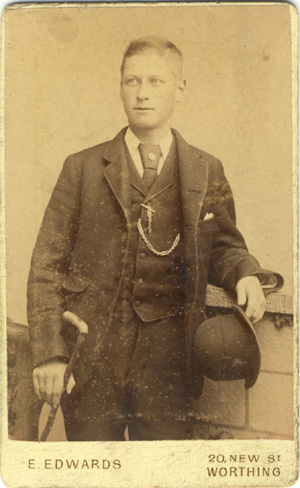
[ABOVE] A carte-de-visite portrait of a young man photographed at Edward Edwards' studio at 20 New Street, Worthing. (c1890). The reverse of this carte also carries an advertisement for Edward Edward's Belle Vue Studio in Chapel Street, Worthing. (See above)

 Edward Edwards of Chapel Street and New Street - The Location of Edward Bex's two studios in Worthing

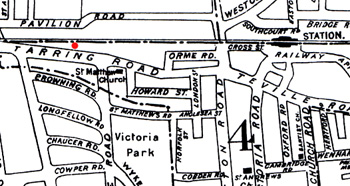
[ABOVE] An early map of Worthing showing the location of Chapel Street where Edward Bex opened his first photographic studio in 1887. [RIGHT]  A 1907 map of showing the two streets where Edward Bex operated as a photographer under the name of Edward Edwards. By the late 1890s Chapel Street had been re-named Portland Road.

Edward Bex and the Excelsior Studio at 20 New Street, Worthing

By the time the 1901 census was due to be carried out, Edward Bex (Edward Edwards) was living at 20 New Street, Worthing with his two grown-up sons. Twenty-six year old Edward Charles Bex was recorded as a "Photographer's Assistant" and Percy William Bex, aged 19 was employed as a "Painter & Decorator". On the 1901 census return, Edward Bex senior is described as a fifty-five year old  "Photographer".

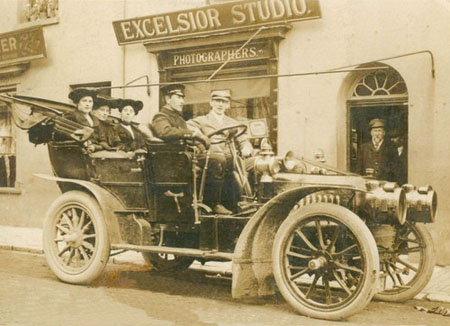
By this date, the Edward Edwards' studio in New Street was known as the "Excelsior Studio". Edward Bex senior was still mainly producing studio portraits in the small carte-de-visite and larger cabinet format at the Excelsior Studio, but he occasionally produced photographic views of Worthing. An advertisement in a 1901 Directory of Worthing made the point that Edward Bex, in the guise of Edward Edwards, provided "personal supervision .. to all Outdoor work." Geoffrey Godden has discovered that Edward Edwards (Edward Bex) supplied "most of the local-view photographs for an interesting pre-1902 publication 'The Standard Picture Guide to Worthing', published at a penny by The Standard Picture Guide Company of London." (1)

By 1904, Edward Bex's eldest son Edward Charles Bex was a full partner in the family photography business and, up until about 1920, the studio at 20 New Street went under the name of Edwards & Son. In the early 1900s, Edward Bex and his son were taking their cameras down to the seafront to take group portraits of holidaymakers on the beach and to take photographic views that could be published in the popular postcard format. In the first decade of the twentieth century, Edwards & Son also became noted for their "real-photograph" postcards of local events.

Edward Bex had retired as professional photographer before the end of the First World War and the studio in New Street was operated by his eldest son until about 1919. ( See below under Edward Charles Bex and the firm of "Edwards & Son" ). Edward Bex senior died on 8th March 1928 at the age of eighty-one.

(1) Collecting Picture Postcards by Geoffrey Godden (Phillimore 1996), page 159


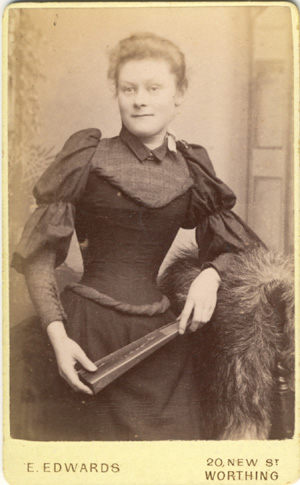
[ABOVE] A carte-de-visite portrait of a young woman photographed at Edward Edwards' studio at 20 New Street, Worthing. (c1890). After Edward Bex (Edward Edwards) closed his Belle Vue Studio in Chapel Street around 1895, he began to call his New Street premises the "Excelsior Studio" (see right).

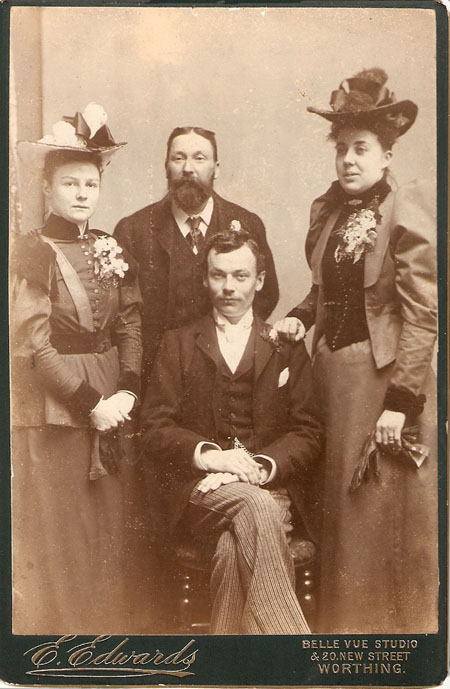
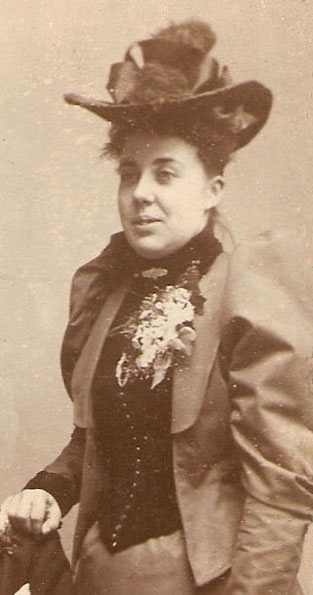
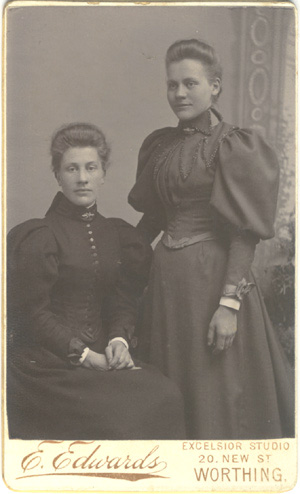
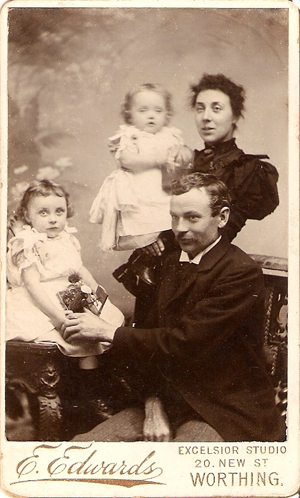
[ABOVE] A carte-de-visite portrait of two women, photographed at Edward Edwards' Excelsior Studio,  20 New Street, Worthing (c1897).  Edward Bex operated a photography business at 20 New Street under the name of "Edward Edwards" from around 1890 until about 1920.

The Excelsior Studio at 20 New Street, Worthing

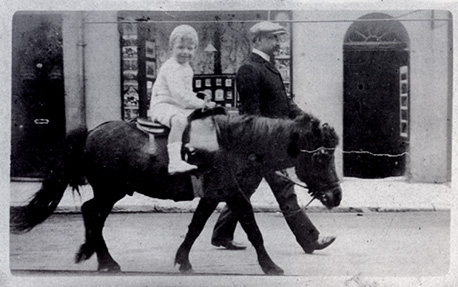
[ABOVE] A real-photograph postcard by Edwards & Son showing a young boy riding a pony in New Street, Worthing. The original postcard was posted on 13th July 1908. The man in the flat cap who leads the pony is passing in front of Edwards & Son's business premises at 20 New Street, Worthing. [Photograph from the collection of Geoffrey Godden].

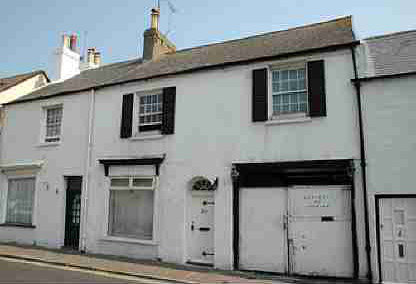
[ABOVE] A modern photograph showing how 20 New Street, Worthing looks today. From around 1890, Edward Bex operated as a photographic studio under the name of "Edward Edwards" from this small terraced house. As Geoffrey Godden remarked in his book Collecting Picture Postcards, "the small fisherman's cottage at 20 New Street was by 1904 grandly entitled the 'Excelsior Studios'.

"Real Photo" Postcards by Edwards & Son of New Street, Worthing

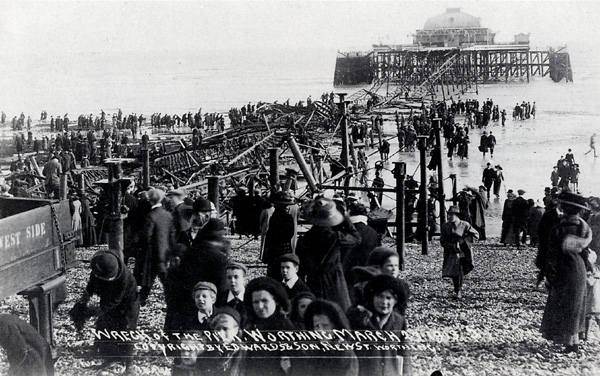
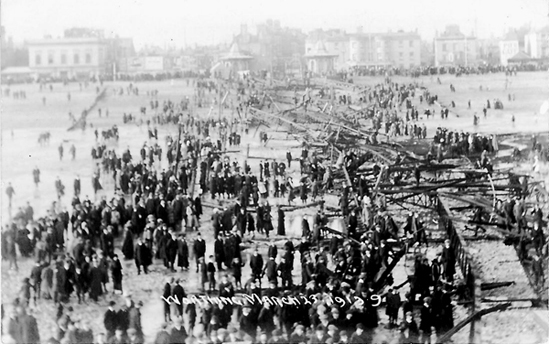
[ABOVE] A real-photograph postcard by Edwards & Son showing Worthing Pier wrecked after a severe storm during Easter 1913. The photograph carries the caption "Wreck of the Pier, Worthing. March 23rd 1913 copyright Edwards & Son, New Street, Worthing". [Photograph from the collection of Rob Blann].

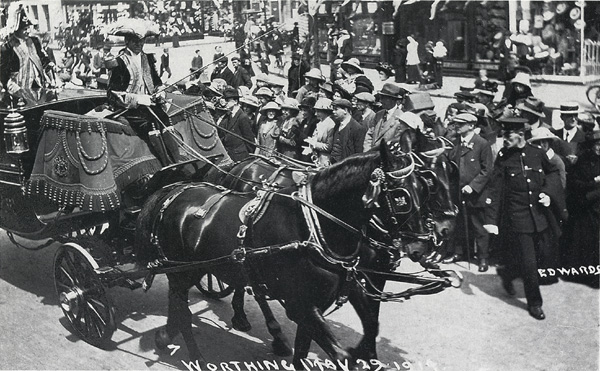
[ABOVE] A carriage from the Lord Mayor's procession as it passes down South Street to the seafront as part of the celebrations to mark the re-opening of  Worthing Pier on 29th May 1914. A "real photo" postcard produced by Edwards & Son of New Street, Worthing. [Photograph from the collection of Rob Blann]

Edward Charles Bex and the firm of "Edwards & Son"

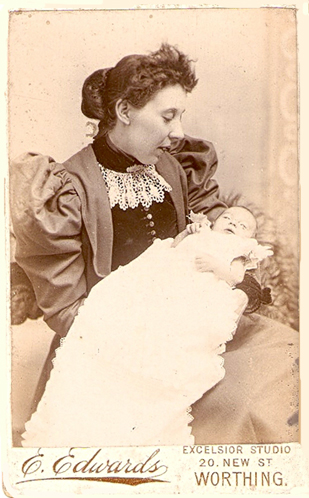
[ABOVE] A postcard portrait of a woman photographed at the studio of Edwards & Son at 20 New Street, Worthing. (c1910).

[ABOVE] The trade plate of Edwards & Son, rubber-stamped on the back of a postcard portrait produced at Edward Bex's Excelsior studio in New Street, Worthing. (c1910).

Edward Bex's eldest son, Edward Charles Bex was born at St. Leonards-on Sea, near Hastings in 1875. By the time the 1891 census was carried out on 5th April 1891, sixteen year old Edward Bex junior was working alongside his father as a "Photographer's Assistant". To distinguish himself from his father, Edward Bex junior was generally known as Charles Bex. When the 1901 census return was completed, Edward Charles Bex is recorded as "Charles E. Bex", while his father, who worked professionally under the name of "Edward Edwards" is listed as Edward Bex. On the 1901 census, (Edward) Charles Bex is described as a twenty-six year old "Photographer's Assistant".

Around 1904, Edward Charles Bex was brought into the family business and from this date the studio at 20 New Street went under the name of Edwards & Son. As Edward Bex senior approached retirement age, Edward Charles Bex played a more active role in the family business.

Edward Charles Bex continued to produce photographic portraits at the Excelsior Studio until around 1919, when he sold the studio at 20 New Street to the husband and wife team of Mr. & Mrs. W. G. Lawson, who described themselves as "Outdoor Photography Experts". The Lawsons kept the studio name of  "Edwards", so from 1920, Edward Charles Bex reverted to his original name. Between 1920 and his death in 1941, Edward Charles Bex produced "real photo" view postcards from his business premises at 150 Tarring Road, Worthing.

Edward Charles Bex died at Worthing on 13th February, 1941, at the age of sixty-five. A death notice in the Worthing Gazette provided a summary of Edward Charles Bex's photographic career :

"... Mr Bex was a photographer in Worthing for nearly half a century, first in New Street where he was in business with his father and since the War at 150 Tarring Road, where he specialized in portraiture work and the production of picture postcards of local views and incidents."


To view a selection of carte-de-visite portraits photographed by Edward Bex at his Excelsior Studio in New Street, Worthing, click on the link below:

Portraits from Edward Edwards' Excelsior Studio, Worthing


ACKNOWLEDGEMENTS & SOURCES

I am indebted to Geoffrey Godden for his research on Edward Edwards (Edward Bex) and his photographic activities in Worthing. Collecting Picture Postcards by Geoffrey Godden (Phillimore 1996) covers much more than the title of the book suggests. In Collecting Picture Postcards, Geoffrey Godden provides an interesting and well informed account of the work of a number of Worthing photographers and picture postcard publishers active in Victorian and Edwardian times, including Edward Edwards (Edward Bex) and his son Edward Charles Bex, Walter and Annie Gardiner and the Worthing Portrait Company.

Two books by Rob Blann on the subject of Worthing's lifeboat service during Victorian and Edwardian times contain a wealth of information and a fine collection of Worthing photographs. The two books by Rob Blann are "A Town’s Pride: Victorian Lifeboatmen & their Community" (Rob Blann, 1990) and "Edwardian Worthing: Eventful Era in a Lifeboat Town" (Rob Blann, 1991).

"Historic Worthing : The Untold Story" by Chris Hare (The Windrush Press, 1991) is an extremely informative and entertaining history of Worthing.


Click here to return to Home Page